ICOMOS continues evaluation of Masuleh’s UNESCO World Heritage nomination
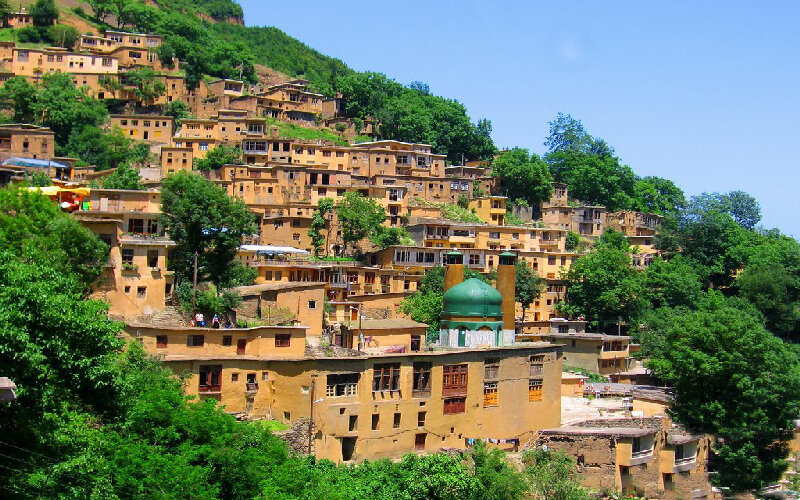
TEHRAN - The evaluation of Masuleh and its cultural landscape for inscription on UNESCO’s World Heritage List is continuing, with an international expert from the International Council on Monuments and Sites (ICOMOS) conducting field assessments and attending specialist meetings on the Iranian town’s architectural, archaeological, ecological and socio-economic heritage.
The ongoing assessment in Gilan province, northern Iran, examines different aspects of Masuleh and its surrounding landscape, including its physical fabric, ecological characteristics, local livelihoods, social structures and management practices, according to the Ministry of Cultural Heritage, Tourism and Handicrafts.
The program includes field inspections and discussions with university professors, researchers and heritage specialists, focusing on safeguarding the town’s Outstanding Universal Value (OUV) while ensuring its long-term conservation and sustainable development.
As part of the assessment, the ICOMOS expert visited the archaeology and anthropology museum of Rasht, where historical collections from across Gilan province, including archaeological discoveries from Old Masuleh, were presented.
Among the notable objects displayed were the Rashi silver-gilt goblet and the Toleh gold goblet from Talesh. The artefacts offer evidence of the region’s ancient history and sophisticated metalworking traditions.
Specialist sessions also examined archaeological excavations and experimental archaeology, particularly research into historical iron-production technologies. Researchers presented findings from a project involving the reconstruction and experimental operation of ancient iron smelting furnaces, shedding light on Masuleh’s industrial history.
Last year, an interdisciplinary research team successfully reconstructed a medieval iron smelting and casting complex at the Old Masuleh archaeological site, demonstrating the technological capabilities of communities that once inhabited the area.
Led by Farzad Asadi, a faculty member at Islamic Azad University, the project involved the experimental reconstruction of a four-stage furnace system documented through approximately two decades of archaeological research.
The experiment went beyond reconstructing the physical structure. Researchers examined its operational characteristics, including airflow, thermal efficiency and the production process from sponge iron to cast iron.
The reconstructed complex featured preheated air channels, permanent stone structures and a dedicated casting installation, distinguishing it from simpler, temporary bloomery furnaces. Laboratory analysis of the resulting slag and iron also indicated high material purity and considerable control over the production process.
Mostafa Pourali, director of the Masuleh World Heritage nomination dossier, has said the second, more detailed reconstruction phase had revealed technological connections with broader Iranian-type furnaces.
The findings point to Old Masuleh's potential role as a permanent iron-production centre and a place of technological exchange along historical trade routes connecting Iran with the Caucasus and Central Asia. The research is expected to be published internationally.
Beyond its archaeological significance, the furnace reconstruction has added an industrial dimension to the understanding of Masuleh's cultural landscape, demonstrating that the settlement's historical importance extends beyond its distinctive architecture and natural setting.
Other discussions during the ICOMOS assessment addressed sustainable destination management and community-based conservation. Participants examined approaches to managing the historic settlement through the active involvement of residents, while protecting its stepped residential fabric and maintaining the relationship between people, the mountainous environment and traditional livelihoods.
Ecological research and archaeobotanical studies also featured in the program. These interdisciplinary investigations aim to improve scientific documentation of the area's historical environmental conditions and the relationship between past communities and their natural surroundings.
The sessions further addressed the physical conservation of Masuleh, including construction regulations, the use of traditional building materials, appropriate restoration techniques and the management of changes in a vulnerable mountain settlement.
According to Iran's nomination dossier, Masuleh is believed to be between 800 and 1,000 years old. Its numerous cemeteries, both within and outside the settlement, are among the archaeological indications of its historical depth.
The town is particularly distinguished by its multi-storey, terraced urban layout, which follows the slope of the surrounding mountain. Its architecture is closely integrated with the natural landscape, while the arrangement of buildings allows the roofs of lower houses to function as pedestrian spaces and courtyards for those above.
The traditional architectural arrangement also reflects the importance of craftsmanship and the visual character of the settlement. With the main facades of houses directly visible to residents and visitors, local builders and artisans paid particular attention to their appearance and architectural details.
The nomination dossier describes the combination of traditional architecture and natural scenery as a potential basis for tourism development, while recognizing tourism and the preservation of local livelihoods as closely interconnected.
The latest round of assessments highlights the need to approach Masuleh as an integrated cultural landscape rather than merely an architectural attraction. Its historic buildings, traditional industries, archaeological remains, ecological setting and living community collectively contribute to its heritage significance.
The continuing ICOMOS evaluation is an important stage in the international assessment of Iran's nomination. ICOMOS serves as an advisory body to UNESCO on cultural heritage nominations, conducting expert evaluations before the World Heritage Committee considers whether a property should be inscribed on the World Heritage List.
AM
Leave a Comment